How to Understand Your Closet KPIs: A CEO's Guide to Wardrobe ROI

I measure almost everything in my business — pipeline, program outcomes, press mentions, reach. But until recently, I had never considered measuring my closet.
Which is funny, because style is one of the oldest threads in my professional story. Years before C-Suite Coach existed, I kept a blog called C-Suite Swag, where I wrote about the link between how you show up and the opportunities that find you. I was writing about style as career infrastructure before I had the language for it. The interest moved from a Tumblr into how I coach leaders, how I lead in my own company, and of course, how I get dressed. What changed, all these years later, is that I finally have the data to back up what I was arguing .
How the data gets made

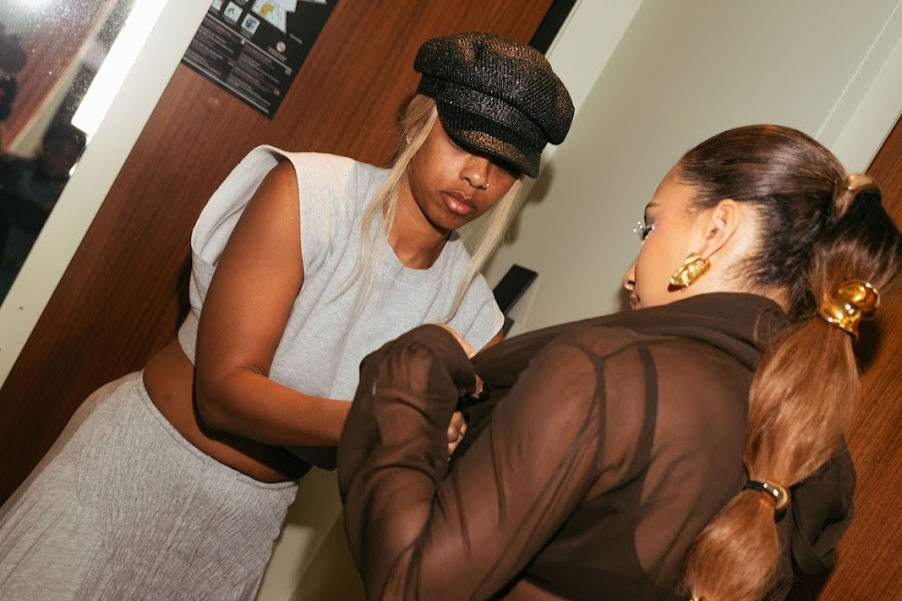
For the last three years, my stylist, Erika Nuñez, and I have built what becomes a lookbook together. We sit down with my actual calendar in front of us — the galas, the client dinners, the speaking engagements, the travel — and we plan looks against real life. Each session produces ten to twelve new looks. In 2024 we met quarterly. In 2025, every other month. This year, we're at nearly monthly, because the calendar demanded it: there was a February day in New York with four events stacked between breakfast and a private dinner, and a March that ran from Paris appointments to a London dinner with Daniel Roseberry at the V&A museum for the Schiaparelli exhibit opening to a Bergdorf Loewe dinner in NYC, all in the span of three weeks. When your schedule looks like that, style stops being a mood and becomes an operations question.
The lookbooks are the planning layer. The measurement layer came when I started cataloging my closet on Indyx. Every piece photographed and logged — more than a thousand items and 270-plus outfits at last count — every wear tracked, cost-per-wear calculated automatically. I expected it to feel like homework. Instead it became one of my favorite rituals — there is a real pleasure in watching a beloved piece's cost-per-wear drop each time it earns another outing, the same pleasure I get from watching any number I care about move in the right direction. My closet went from a place where money disappeared to a portfolio I could actually read.


Recently, I went back through all three lookbooks and the closet data, and counted everything — every look, every garment, every earring. The numbers told me a story about my own evolution that I could not see while I was living it.
What the numbers said
Across 2024, 2025, and 2026, the lookbooks hold 258 styled looks built from more than 1,600 individual pieces. The totals flatter me less than the trajectory does.
In 2024, we styled 59 looks and 28 pieces appeared in more than one of them. In 2025, 74 looks and 48 repeats. This year, 125 looks so far — and 118 pieces working across multiple looks, with a core rotation of about ten bags carrying half the book. My most-worn item of 2026 is a single gold sculptural earring that appears in twenty different looks. One striped shirt shows up eight ways.
A stylist would call that a capsule-wardrobe success story, and she'd be right. As a coach, I read something else in it too: a measurable record of a person moving from acquiring to mastering.
Explore, edit, encode
The single years tell you what I wore. Comparing the years tells you who I was becoming. My style moved through three distinct chapters, and if you've ever scrolled deep into your own camera roll and barely recognized the person in the photos, you've lived a version of them too.
2024: Exploration.
Every color at once: marigold, hot pink, turquoise, sequins for a Tuesday. The boards are covered in notes to myself, half wish-list, half troubleshooting. I will defend that era to anyone, because you cannot skip it. The executives I coach who feel stuck in their presentation usually aren't over-explored; they're under-explored, editing themselves before they've gathered enough evidence to know what deserves to stay.
2025: Consolidation.

Burgundy and black entered as anchors. Tailoring showed up. The boards themselves grew more disciplined — fewer notes, cleaner systems, and a stylist relationship that had deepened into real shorthand. This is the uncomfortable middle of any identity project: you find yourself saying no to things you genuinely like, because you've started noticing the difference between what you like and what is yours.
2026: Encoding.
The clothes themselves got calmer — clean neutrals with one statement — which lets what I actually want people to read come through: consistency, intention, care. The personality now lives largely in the accessories — that gold earring, sculptural belts, a small family of bags — set against calm backgrounds so they register instantly, whether the room is a boardroom, a gala, or a golf retreat. We even locked a single beauty look for the year where earlier books carried options on every page. When people can describe my look without me in the room — the neutrals, the gold, the polish — what they're really describing is how I show up: prepared, deliberate, the same woman in every setting. That kind of consistency builds trust before I say a word, and it was always the goal.
The data gave me permission to invest deeper

Once I could see my wardrobe ROI clearly: I started buying fewer things and better things.
That sequence matters. The advice to "invest in quality" always sounded right to me, and it also always required a small act of faith — the price tag is a fact on day one, while the value is a promise about the future. Tracking wear changed the math I could see. When the data shows a piece I loved enough to style into look after look, the next investment at that level stops feeling like an indulgence and starts looking like the obviously correct allocation. My wardrobe spending has gone up per piece and down in volume, and the cost-per-wear on my hero pieces has collapsed even as the looks became more polished. I'm deepening positions in what already performs, which is precisely what any good portfolio manager would tell you to do.
The number I keep returning to is 28 versus 118. Many of us inherited an arbitrary rule at some point: don't be seen in the same thing twice. But why on earth would we not wear the items we own and spent our hard earned money on? I understand where it comes from, and I followed it longer than I'd like to admit. The data finally talked me out of it. Every time that earring appears, it does more work than the time before, the way a good brand does, the way a well-told founder story does. A new purchase has to introduce itself to every room. A signature walks in already known.
There's one more return that never shows up on a receipt: time. Before the lookbook system, a big-event morning could cost me an hour or more of deliberation, and I'll admit the truer cost — there were events I skipped altogether because I couldn't settle on how I wanted to show up. Now every look is decided in one sitting with my stylist, weeks ahead, mapped to the actual calendar, and my mornings hold no styling deliberation at all. That hour matters, because an executive's morning is already an operation: before nine I'm walking and connecting with my family and dog, reviewing the day's needs, working out, planning meals. Getting dressed is one less thing to think about, and the reclaimed time goes where it compounds — hair and makeup done the way I actually want to present, and a calmer, more confident walk into whatever the day holds. Decision fatigue is a real tax on leaders. A signature, backed by a system, took it off my books.
Values made visible

The data did one more thing that excited me: it validated that my spending matches my values. I've said for years that I want my wardrobe to reflect the community I come from and the future I'm invested in — fewer pieces, better pieces, and more of them from Black and queer designers whose work belongs in the rooms I'm in. The lookbooks made that intention visible; Indyx made it measurable. Today, roughly 12 percent of my cataloged closet — about one in every eight pieces — comes from Black-owned brands, more than thirty labels in all. Sergio Hudson sits among my most-collected designers, ahead of most of the European houses, in company with Laquan Smith, Christopher John Rogers, Harbison, Khiry, Brandon Blackwood, Brother Vellies, and Telfar. And that figure doesn't count my athleticwear or undergarments, which I source from Black-owned brands like Actively Black and Nude Barre. I'm proud of that number, and I'm paying attention to it, because a closet is a budget, and a budget is a values document. Every purchase — and every wear I log — is a small vote for the designers I want to see thriving.
Run your own audit
You don't need three years of lookbooks or a stylist on retainer to do this. Your camera roll is an archive. Your tagged photos are an archive. An afternoon of cataloging on an app like Indyx will hand you more honest information about your style than a year of shopping. Engage your curiosity before you engage your wallet. You can ask yourself:
Which pieces have I worn more than three times this year?
What do people compliment repeatedly — and do I own it in depth or keep ignoring it?
What did I buy in the last six months that has appeared exactly once?
If I could only keep a third of my closet, what survives, and what does that surviving third have in common?
Whatever that last answer reveals, that is your signature asking for your attention. The work isn't to shop for a new identity. The work is to notice the one your own behavior has been voting for all along, and then to repeat it on purpose until the world can describe you without you in the room.
I've been making this argument since the Tumblr days. What's different now is that I can show you the receipts. Your closet has been keeping score all along — on what you value, what you reach for when it matters, what you loved enough to wear again. The return on those investments is already sitting in the data: in the pieces that earned their place, the looks they built, the way you showed up in every room this year. All you have to do is look.